Protocol-Level Capabilities Built for Enterprise-Grade Assurance

Every ULedger capability is a core protocol primitive — not a plugin, not a bolt-on. Post-quantum cryptography, zero-knowledge proofs, cross-chain anchoring, and smart contract execution are engineered into the foundation. Here is what that means for your enterprise.
Shaking Hands
Digital Human Dissolution
Post-Quantum Secure
ML-DSA-87
NIST FIPS 204
Immediate Finality
Cross-Merkleization
ZK-SNARKs
Groth16
PLONK
Council BFT
WASM Smart Contracts
No Gas Fees
SOC 2 Type 2
Tamper-Proof Records
On-Chain Auditability
Algorithm Agility
Post-Quantum Secure
ML-DSA-87
NIST FIPS 204
Immediate Finality
Cross-Merkleization
ZK-SNARKs
Groth16
PLONK
Council BFT
WASM Smart Contracts
No Gas Fees
SOC 2 Type 2
Tamper-Proof Records
On-Chain Auditability
Algorithm Agility
Post-Quantum Secure
ML-DSA-87
NIST FIPS 204
Immediate Finality
Cross-Merkleization
ZK-SNARKs
Groth16
PLONK
Council BFT
WASM Smart Contracts
No Gas Fees
SOC 2 Type 2
Tamper-Proof Records
On-Chain Auditability
Algorithm Agility
Post-Quantum Secure
ML-DSA-87
NIST FIPS 204
Immediate Finality
Cross-Merkleization
ZK-SNARKs
Groth16
PLONK
Council BFT
WASM Smart Contracts
No Gas Fees
SOC 2 Type 2
Tamper-Proof Records
On-Chain Auditability
Algorithm Agility
PROTOCOL CAPABILITIES

Six Primitives. One Unified Protocol.

These are not features layered on top of a generic blockchain. They are protocol-level primitives — built into the consensus layer, the cryptographic stack, and the execution environment from the ground up.

Post-Quantum Cryptography

ML-DSA-87 · NIST FIPS 204 · CRYSTALS-Dilithium Level 5

The only NIST-finalized post-quantum digital signature algorithm, running natively in the ULedger protocol today. Equivalent to AES-256 security. Protects against harvest-now/decrypt-later attacks — data signed today stays protected when quantum computers mature.

No Gas Fees · Predictable Licensing

Flat-rate licensing replaces volatile gas fees entirely. No token dependency. No crypto market exposure. No surprise invoices. Enterprise finance teams get a predictable infrastructure cost that fits standard procurement cycles.

Wallet-Based Access Control

Hierarchical Permissions · CRUD-Level Access · Cascade Disable

Enterprise org structures mapped directly onto the protocol layer. Every department, team, and user gets a named permission group with create, read, update, and delete controls — enforced at the consensus layer, not the app layer.

WASM Smart Contracts

Deploy · Invoke · Upgrade · Rollback

WebAssembly execution with gas metering, memory isolation, and atomic state rollback. Write in Rust, Go, C++, or AssemblyScript. Four native lifecycle stages — no redeployment downtime, no proprietary language requirement.

Cross-Merkleization

ZK-Proven Cross-Chain Anchoring · No Bridges · No Intermediaries

Patented protocol anchoring state across independent chains using ZK-SNARK proofs. When a block finalizes on Chain A, its PLONK-proven header is embedded into every connected chain's next block — permanently, mathematically, without sharing a single byte of underlying data.

Council BFT Consensus

Immediate Finality · Deterministic · Byzantine Fault Tolerant

Modified Byzantine Fault Tolerant consensus with deterministic leader election. Three-phase commit: PreVote → PreCommit → Commit. Every block is final the moment it commits — no forks, no reorgs, no probabilistic confirmation windows. Up to ⅓ Byzantine fault tolerance with a minimum council of 3 nodes.

Eliminate Volatile Spend

Green Gradient Icon Represents Secure Digital Payments, Crypto Wallet Security

Wallet-Based Access Control

Dynamic Data Governance

Customizable Business Logic & Rules

Verification while keeping Data Private

DEPLOYMENT MODEL

Built for Enterprise. Priced for Enterprise.
No tokens. No gas. No crypto exposure. Just cryptographic infrastructure on a predictable cost model.
Non-Crypto Centric
ULedger runs on flat-rate licensing — zero gas fees, zero token requirements, zero exposure to crypto market volatility. Enterprise finance teams get a stable, budgetable infrastructure line item. No surprises.
Native Token Standards
When tokenization is the requirement, ULedger ships native fungible (ERC-20 equivalent), non-fungible (ERC-721), and multi-token (ERC-1155) standards as protocol-level transaction types — not smart contract workarounds. Full ZK proof coverage included.
Enterprise Focused
Main Network or dedicated sovereign chain — both are first-class deployments. Both cross-merkelize. Both access every protocol capability. The choice is based on your compliance posture and infrastructure requirements, not feature availability.
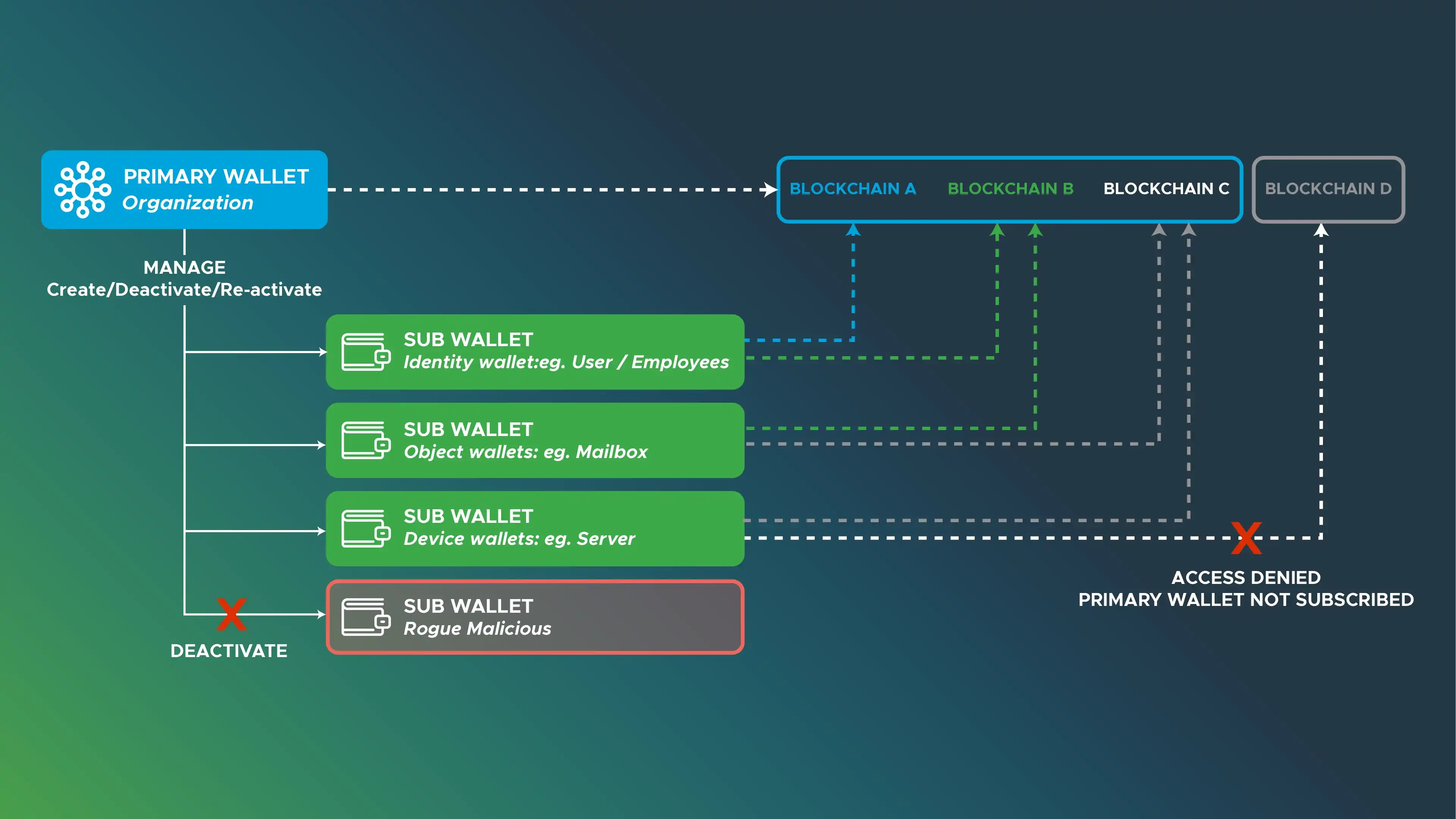
Hierarchical Blockchain Wallet Management System for an Organization
Data Governance

Wallet-Based Access Control

Enterprise identity and access control mapped directly onto the protocol layer. Every wallet carries named permission groups with CRUD-level granularity — enforced at consensus, not at the application layer. Your org structure becomes your security model.
Hierarchical Wallet Architecture
ULedger's parent-child wallet model mirrors how enterprises actually operate. A root wallet governs an organization. Department wallets branch beneath it. Team and user wallets extend from there — each inheriting and restricting permissions down the chain.

Need to offboard a vendor, lock down a compromised account, or revoke an entire division's access? One transaction disables the parent wallet and atomically cascades to every descendant in the subtree. No orphaned active accounts. No manual cleanup. No gaps.

Built-in groups: admin (full CRUD), wallet (management operations). Custom groups are fully configurable per deployment.

✅ KEEP the wallet diagram image — it's the strongest visual asset on the entire page.
Diagram showing a primary wallet managing multiple sub wallets for identity, object, and device wallets connected to blockchains A, B, and C, with a rogue sub wallet deactivated and denied access to blockchain D.
INTEROPERABILITY

Cross - Merkleization​

Trustless cryptographic state anchoring across independent chains. No bridges. No relay operators. Verified by zero-knowledge proofs, not by counterparty trust.
a Network of Connected Nodes (Circle Structure)
Blockchain Network Independence
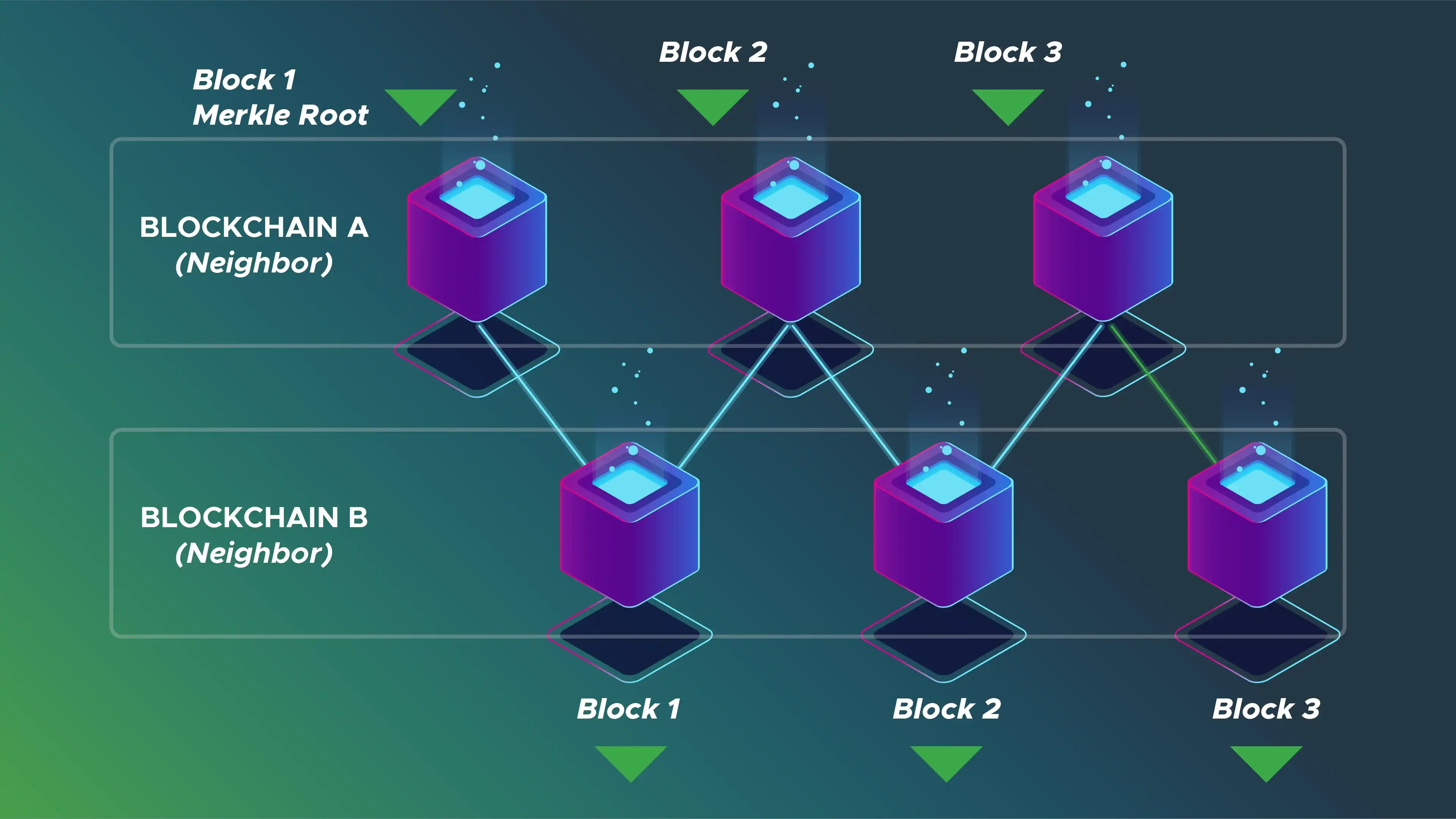
Each blockchain in a ULedger network operates as a fully autonomous state machine — its own consensus, its own transaction pool, its own cryptographic configuration. Cross-Merkleization binds them together cryptographically without creating shared infrastructure dependencies or trust assumptions between chains.
Diagram showing two neighbor blockchains, A and B, each with three interconnected blocks labeled Block 1, Block 2, and Block 3, illustrating blockchain network independence.
Blockchain or Package Security
Privacy-First Design
When a block finalizes on Chain A, its PLONK-proven block header is broadcast to all connected chains. Each receiving chain independently verifies the ZK proof before embedding that Merkle root into its own next block. The foreign chain's state becomes a permanent cryptographic commitment — without a single byte of underlying transaction data ever leaving the originating chain.
Diagram showing Neighborhood with three blockchain neighbors: Blockchain A, Blockchain B as Principle Blockchain, and Blockchain C, each with a latest Merkle root, connected by cross-Merkleization proof exchange enabling cryptographic proof exchange without actual data sharing.
Technical Concept of a Merkle Tree Used Within Blockchain Technology
Blockchain Network Architecture Designed to Facilitate Secure Data Interactions Between Different Blockchain Ledgers
HOW IT WORKS

The Cross Merkleization Process

1

Proof Generation

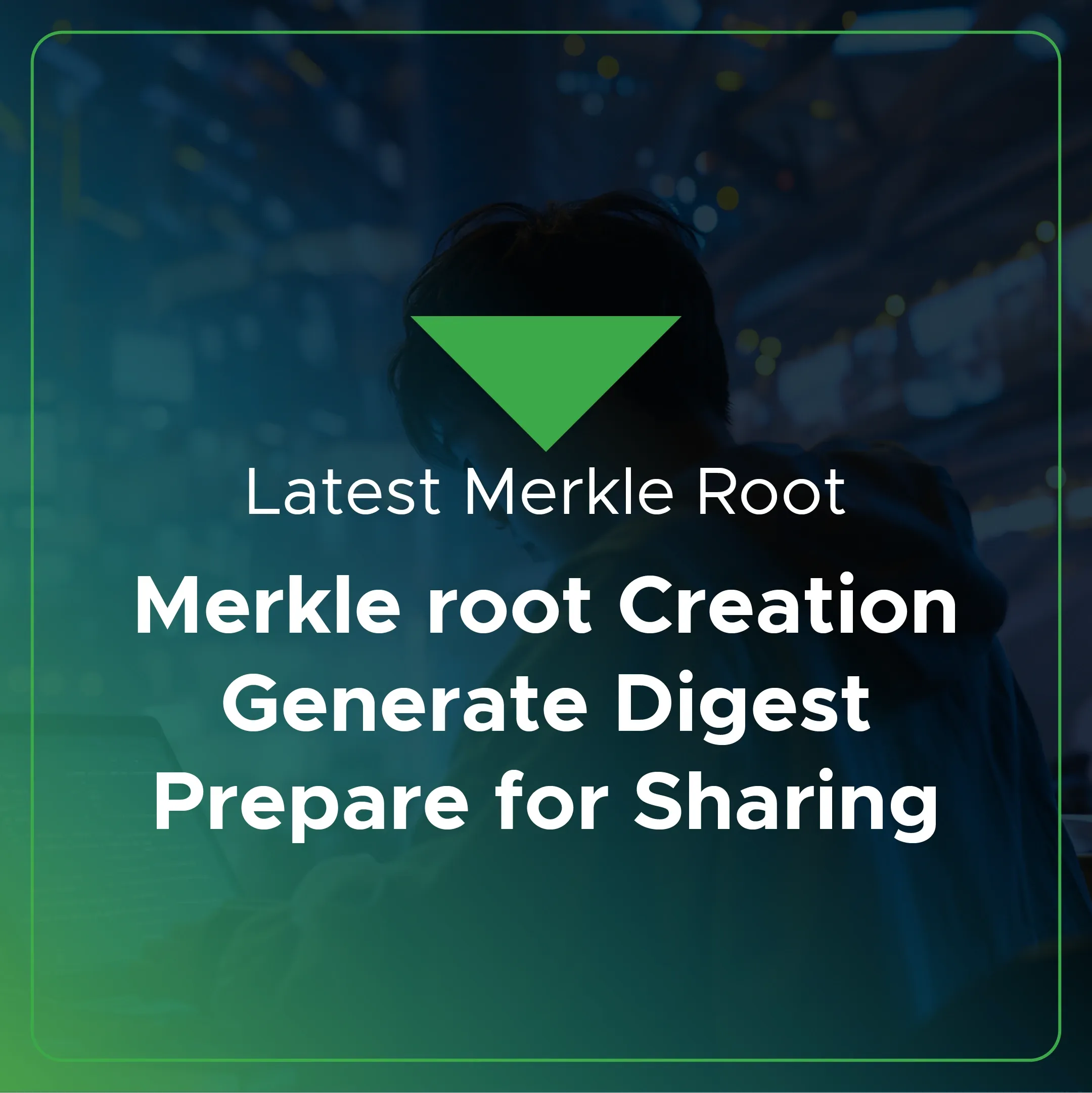
Merkle Root Creation
When a block finalizes on any chain, the proposer generates a PLONK zero-knowledge proof covering the full block header — all transaction IDs, the previous Merkle root, and any embedded cross-chain references. This proof can be verified by any party in ~3–5 ms without access to chain state. The proof itself is ~500 bytes.
2

Verified Broadcast

Compare Structures Maintain Privacy
The PLONK-proven block header is broadcast across the ULedger peer-to-peer network via a dedicated Cross-Merkleization topic channel. Each receiving chain independently verifies the proof before accepting the cross-reference. No trust in the broadcasting node is required — the zero-knowledge proof is the authority.
3

Immutable Anchoring

Cryptographic Verification
Once verified, the foreign Merkle root is embedded directly into the receiving chain's next block as a committed cross-reference. That anchoring is now permanent — part of the receiving chain's immutable record forever. Data integrity is provable across chains indefinitely, with no data exposure, no intermediary, and no expiry date.
an Abstract Digital Background Featuring a White Hexagonal Network or Grid
WEB ASSEMBLY

Smart Contracts

Production-hardened WebAssembly execution — sandboxed, gas-metered, and built for enterprise workloads that cannot afford downtime or unpredictable costs.
Timed Security or Efficient Protection

Powerful Secure Runtime

ULedger's WASM virtual machine runs inside a fully sandboxed execution environment with linear memory isolation, call-stack depth limits (1,000 frames), and a circuit breaker for repeated failures. Gas metering covers every read, write, delete, and memory operation — giving you exact, predictable execution costs before you ship a single contract.
Universal Symbol for Coding, Web Development, and Programming

Develop With Ease

Write smart contracts in any language that compiles to WebAssembly — Rust, Go, C++, or AssemblyScript. Your engineering team ships with the tools they already know. No proprietary language requirement, no new runtime to learn, no vendor lock-in on your development stack.
Document Icon Represents Growth

Contracts That Evolve

ULedger supports four contract lifecycle stages natively at the protocol level: Deploy → Invoke → Upgrade → Rollback. Update a live contract without deployment downtime. Roll back to any prior version in a single transaction. State migration is atomic and deterministic — no manual data handling required.
ZERO-KNOWLEDGE PROOFS

Every Transaction Proven. Every Block Verified. No Chain State Required

ULedger runs two complementary ZK proof systems simultaneously — one for transactions, one for blocks. Together they enable lightweight external validation, trustless auditing, and cross-chain verification at enterprise scale.

Groth16 — Transaction-Level Validity

A Groth16 ZK-SNARK proof is generated for every transaction and embedded as a compact validity certificate. It proves — without revealing any private inputs — that the sender holds a valid key, the signature is correct, the payload Merkle root matches, the timestamp is within the network's validity window, and the sending wallet is enabled.

Proof size: ~200 bytes. Verification time: ~1–2 ms. External validators verify a transaction's full correctness with zero wallet state lookup, zero signature re-verification, and zero payload exposure.

PLONK — Block-Level Integrity

A PLONK proof is generated by the block proposer and covers the entire block header — the Merkle root correctly computed from all transaction IDs, the previous Merkle root, and all cross-chain references. It proves the block index is exactly one greater than the previous block, and at least one transaction is included.

Proof size: ~500 bytes. Verification time: ~3–5 ms. The same PLONK proof system powers Cross-Merkleization — every cross-chain anchor is independently ZK-verified before it commits.
Together, Groth16 and PLONK enable a powerful external validation model: any authorized party can verify an entire block's correctness — including every transaction inside it — by checking two compact proofs. No chain state download. No data exposure. No trusted intermediary.
FAQ's

Frequently Asked Questions

What Are Quantum Safe Security Solutions?
Quantum-safe security solutions use cryptography designed to resist attacks from future quantum computers. They protect sensitive data even if current encryption standards become vulnerable.
 How Does Blockchain Ensure Data Integrity in Enterprise Systems?
Blockchain creates immutable, time-stamped records that cannot be altered without detection. This makes it easier to prove what happened and when.
What Are Post Quantum Cryptography Solutions for Long-Term Protection?
Post-quantum cryptography solutions use new algorithms built to withstand quantum-level computing attacks. They help organisations protect data for decades, not just years.
What Is a Quantum Safe Blockchain?
A quantum-safe blockchain combines distributed ledger architecture with quantum-resistant cryptography. It keeps records tamper-evident while preparing for future threats.
Post Quantum Cryptography vs Traditional Encryption: What’s the Difference?
Traditional encryption can be broken by powerful quantum computers in the future. Post quantum cryptography is designed to stay secure even in that scenario.
How Does Blockchain Improve Data Integrity in Regulated Industries?
It creates permanent audit trails that support compliance and investigations. Regulators can verify records without relying on editable internal logs.
Why Do Enterprises Need Quantum-Resistant Cryptography Today?
Data stolen today can be decrypted later when quantum technology matures. Quantum-resistant cryptography prevents that long-term exposure.
How Can Blockchain and Post-Quantum Cryptography Work Together?
Blockchain secures and timestamps records, while post-quantum cryptography protects the underlying signatures and keys. Together, they create durable, tamper-evident systems.
What Are the Risks of Quantum Computing to Current Encryption Methods?
Quantum computers could break widely used public-key encryption algorithms. That would expose stored data, digital signatures, and authentication systems.
How Do Quantum Safe Blockchain Solutions Protect AI Systems and Data Provenance?
They anchor AI inputs and outputs with cryptographic proofs that cannot be altered later. This supports traceability, auditability, and trust in automated decisions.
What is Cross-Merkleization?
Cross-Merkleization is ULedger's proprietary protocol for cryptographically anchoring state between independent blockchain instances. When a block finalizes on one chain, its PLONK-proven header is embedded into every other connected chain. This creates trustless, verifiable state binding across chains — no bridge contracts, no relay operators, no trusted intermediaries required.
Do I need to hold cryptocurrency or pay gas fees to use ULedger?
No. ULedger operates on a flat licensing model. There are no gas fees, no required token holdings, and no exposure to crypto market volatility. Pricing is predictable and designed for enterprise procurement cycles.
What is the difference between Groth16 and PLONK in ULedger?
ULedger uses Groth16 for per-transaction proofs and PLONK for per-block header proofs. Groth16 produces a ~200-byte validity certificate for each transaction, proving correctness without revealing private inputs. PLONK produces a ~500-byte proof covering the entire block's Merkle tree integrity. Both proofs can be verified in milliseconds by any authorized external party without accessing chain state. PLONK also powers Cross-Merkleization — every cross-chain anchor is ZK-verified before it commits to the receiving chain.
What programming languages can I use to write ULedger smart contracts?
Any language that compiles to WebAssembly — including Rust, Go, C++, and AssemblyScript. ULedger's WASM execution environment is language-agnostic by design. Your engineering team uses the tools they already know. There is no proprietary language requirement and no vendor lock-in on your development stack.

Ready to See the Protocol in Action?

Every capability on this page is production-ready today. Post-quantum cryptography, Cross-Merkleization, ZK proofs, BFT finality — deployed and running. Let us show you exactly how it fits your infrastructure.