Blank White

The Quantum Threat Is Not Coming. It's Already Here.  

ULedger Has The Solution For You

Adversaries are harvesting your encrypted data today — financial records, patient files, legal documents, intellectual property — to decrypt it the moment quantum computing matures. That moment is closer than most enterprise security teams are planning for.

ULedger is the only enterprise blockchain protocol with ML-DSA-87 post-quantum cryptography built natively into the consensus layer — not bolted on, not on the roadmap. Running in production today. NIST FIPS 204 compliant. The only post-quantum signature standard finalized by the National Institute of Standards and Technology.
WHY THIS MATTERS NOW

The Window to Act Is Narrowing

10–15 Years

Estimated timeline to cryptographically relevant quantum computers — per NIST and NSA assessments

2024

Year NIST finalized ML-DSA-87 as the first post-quantum signature standard — the algorithm ULedger ships today

Harvest Now, Decrypt Later

Active attack strategy in use today — adversaries collect encrypted data now and hold it until quantum decryption is viable

0

Number of enterprise blockchain platforms shipping ML-DSA-87 natively in production — except ULedger
If your records have long-term sensitivity — financial instruments, healthcare data, legal documents, intellectual property — the protection window is before the threat arrives. Not after.
Hierarchical Blockchain Wallet Management System for an Organization

Trust Your Data Again: The Power of Blockchain Integrity

Data integrity sits at the core of every digital system. Whether you manage financial records, user data, or internal logs, one issue remains constant. You need to trust that your data has not changed without permission.
Traditional systems try to solve this with access controls and backups. These methods help, but they still rely on central authority. That creates gaps. If someone gains access or alters records internally, detection often comes late.
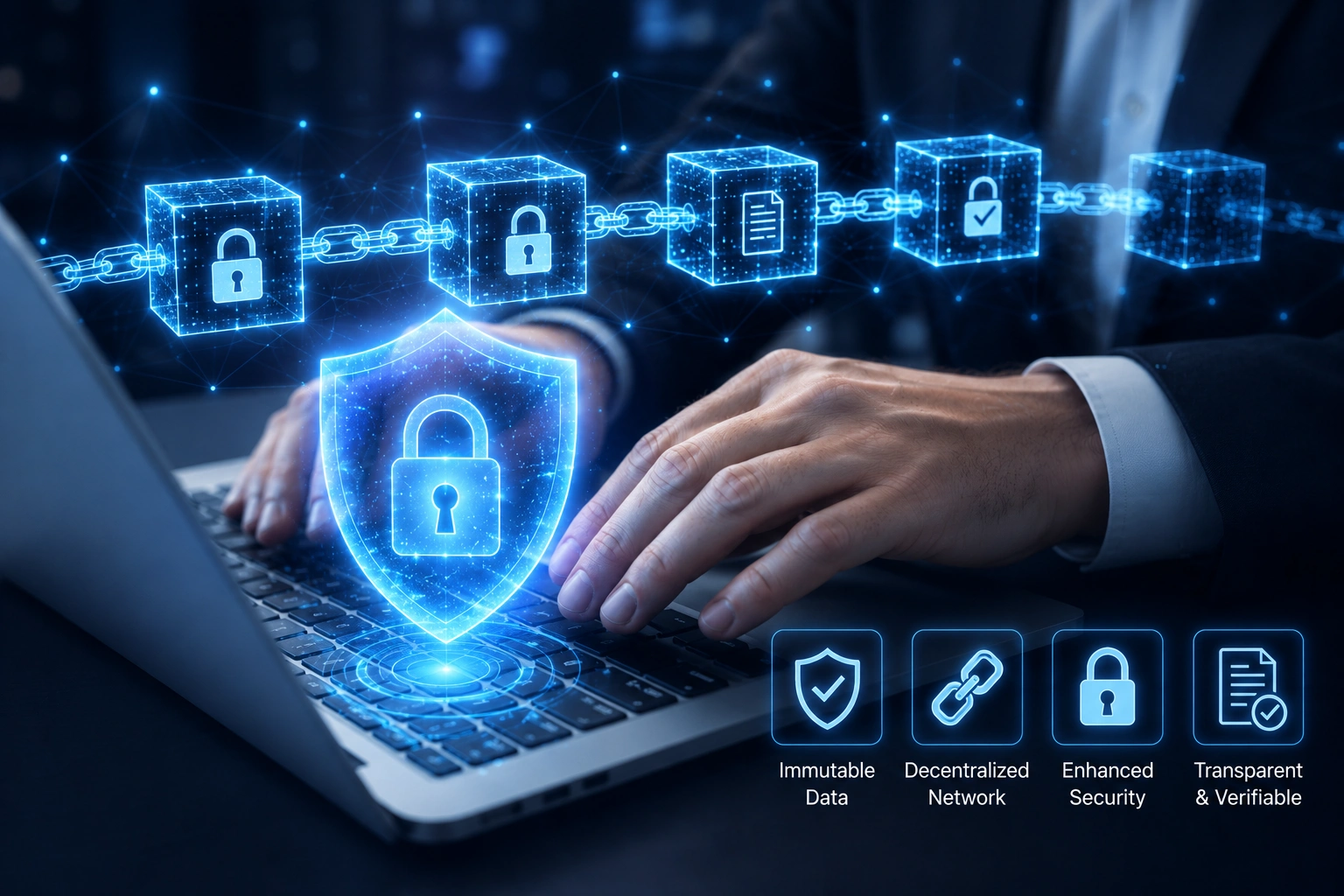
Blockchain changes this model. It builds a system where every record becomes verifiable and resistant to tampering. When combined with Quantum Safe security, it also prepares your data for future risks.
This page explains how blockchain protects data integrity, how it works in enterprise systems, and why Quantum Safe design matters today.

What Is Blockchain Data Integrity

Blockchain data integrity means your data stays accurate, consistent, and unchanged unless a valid update occurs. It ensures no one can alter records silently or rewrite history.
In a blockchain system, every entry gets recorded in a block. Each block connects to the previous one through cryptographic links. This creates a chain that stores data in a fixed sequence.
Once a block gets added, no one can edit it without affecting the entire chain. That makes tampering visible and easy to detect.
Key characteristics of blockchain data integrity include:
  • Immutable records that cannot change after confirmation
  • Time-stamped entries that track when data was added
  • Transparent audit trails that show every action
This structure allows teams to verify data at any point without relying on a single authority. It creates a shared source of truth across systems and stakeholders.
Hierarchical Blockchain Wallet Management System for an Organization

Six Vulnerabilities Every Enterprise Security Team Knows

Modern enterprise data environments are distributed, interconnected, and under attack from two directions simultaneously — classical threats from insiders and adversaries today, and the quantum threat that makes everything you signed yesterday breakable tomorrow. Most security stacks address one or the other. ULedger addresses both at the protocol level.
1. Mutable Logs Audit logs stored in traditional systems can be edited, deleted, or quietly altered by insiders or attackers. A tampered log is worse than no log — it creates false evidence.

2. No Independent Verifiability When regulators or auditors ask "prove this record hasn't changed," most organizations have only their own word. That is not a defensible position in litigation or a regulatory examination.

3. Harvest-Now / Decrypt-Later Attacks Sophisticated adversaries are collecting your encrypted data today with the explicit intent to decrypt it once quantum computing matures. Records with long-term sensitivity — signed now with classical encryption — are already compromised in transit.

4. Compliance Exposure at Scale HIPAA, FINRA CAT, SOX, GDPR, and SEC recordkeeping rules require immutable, auditable records. A single gap in the audit trail creates liability that compounds across every affected record.

5. Cross-System Verification Gaps Data shared between departments, partners, and vendors loses its integrity chain the moment it leaves your system. Counterparties have no way to verify the record you sent them is unchanged.

6. Classical Encryption Has an Expiry Date Every RSA and ECC signature in production today — including those on your most sensitive long-term records — will be broken by a sufficiently powerful quantum computer. The question is not if. It is when.
ULedger was designed to solve all six simultaneously. Here is how.
Explore Solutions
SECURITY ARCHITECTURE

Defense-in-Depth. Five Layers. No Single Point of Failure.

Every ULedger deployment runs five independent security layers simultaneously. Compromising one layer does not compromise the system. That is not marketing copy — it is protocol architecture.

01

Network Security

Encrypted Transport · Peer Authentication · Rate Limiting · Unique Request IDs
Every node connection is encrypted. Every peer is authenticated against registered keys before admission. Message size limits and rate limiting prevent volumetric and denial-of-service attacks. Unique request IDs prevent replay attacks at the network boundary.

02

Protocol Security

Cryptographic Signatures · Replay Protection · Strict Validation Pipeline
Every message transmitted across the ULedger network carries a cryptographic signature. Timestamps are validated against a distributed median — a 5-second window enforced across the council — making replay attacks mathematically bounded. Every transaction passes a six-step sequential validation pipeline before it touches consensus.

03

Consensus Security

Council BFT · Immediate Finality · Equivocation Detection · ⅓ Byzantine Fault Tolerance
ULedger's Council BFT consensus tolerates up to ⅓ Byzantine nodes — members that lie, equivocate, or fail — without compromising correctness. Equivocation (double-voting) is detected and flagged automatically. Every committed block is immediately and permanently final. There are no forks, no reorgs, and no probabilistic confirmation windows for an attacker to exploit.

04

Cryptographic Security

ML-DSA-87 · ZK-SNARKs · Algorithm Agility · Split-Field Commitments
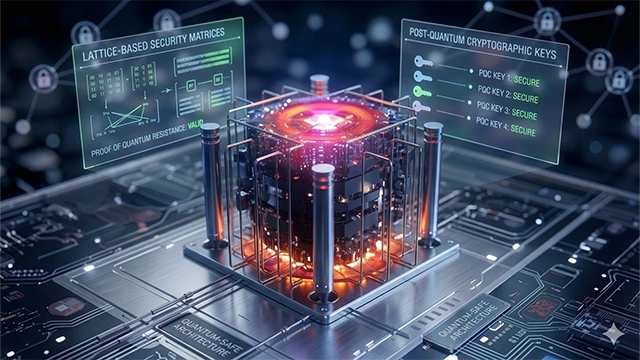
This is where ULedger separates from every other enterprise blockchain platform. ML-DSA-87 (CRYSTALS-Dilithium Level 5, NIST FIPS 204) provides 256-bit equivalent security — the same level as AES-256 — based on the hardness of Module Learning with Errors, a problem with no known efficient quantum algorithm. Algorithm agility means existing chains can migrate to post-quantum keys via Cross-Merkleization without data loss. ZK proofs on every transaction and every block header enable trustless external verification with zero data exposure.

05

Execution Security

WASM Sandbox · Gas Limits · Call Stack Bounds · Atomic State Rollback · Circuit Breaker
Smart contracts execute inside a fully sandboxed WebAssembly virtual machine. Linear memory isolation prevents contract-to-contract memory access. Gas metering caps every execution. Call stack depth is bounded at 1,000 frames. A circuit breaker trips on repeated failures. Every storage write is atomic — success commits everything, failure rolls back everything. There is no partial execution state.
Most enterprise security architectures are a perimeter with soft interiors. ULedger is cryptographic integrity at every layer — from the network packet to the final block commit.

How Blockchain Ensures Data Integrity

Blockchain uses a combination of technologies to protect data from unauthorized changes. Each layer plays a specific role in maintaining integrity.

Immutable Ledger

Once data enters the blockchain, it becomes permanent. You cannot edit or delete it without altering the entire chain. This creates a reliable history of all transactions and records.

Cryptographic Hashing

Each block contains a unique hash. This hash acts like a digital fingerprint of the data. Even a small change in the data creates a completely different hash.
If someone tries to modify a record, the mismatch becomes obvious immediately.

Distributed Validation

Blockchain does not rely on one central system. Multiple nodes validate each transaction before adding it to the chain.
This distributed approach reduces the risk of manipulation. An attacker cannot control the system without influencing a large portion of the network.

Tamper Detection

Every block links to the previous one. If someone changes one block, it breaks the chain connection.
This makes tampering easy to detect. Systems can flag inconsistencies in real time and prevent further actions.
Together, these mechanisms create a system where data integrity stays built into the architecture, not added as a separate control.
POST-QUANTUM CRYPTOGRAPHY

ML-DSA-87: The Standard. In Production. Today.

Not a roadmap item. Not a beta feature. Not available as an add-on. ML-DSA-87 is a core protocol primitive in ULedger — selectable per chain deployment, running natively in the consensus layer.

Technical Specification:

What It Is

ML-DSA-87 is CRYSTALS-Dilithium at Security Level 5 — the highest variant — standardized by NIST as FIPS 204 in 2024. It is the first and only post-quantum digital signature algorithm finalized by the National Institute of Standards and Technology.

It is based on the hardness of Module Learning with Errors (MLWE) — a mathematical problem for which no efficient classical or quantum algorithm is known.
Security Level
Level 5 — equivalent to AES-256, 256-bit classical security
Security Level
Level 5 — equivalent to AES-256, 256-bit classical security
Security Level
Level 5 — equivalent to AES-256, 256-bit classical security
Security Level
Level 5 — equivalent to AES-256, 256-bit classical security

Why It Matters:

What It Means for Your Data

Classical signatures will break. Every RSA key, every ECDSA signature, every Ed25519 record in your systems today can be broken by Shor's algorithm on a sufficiently powerful quantum computer. Security analysts project cryptographically relevant quantum computers within 10–15 years. Your records signed today may still be active then.
Harvest-now / decrypt-later is active today. Nation-state adversaries are collecting encrypted data right now. They do not need quantum computers yet — they are waiting. Financial records, patient data, legal documents, and IP signed with classical algorithms are already at long-term risk.
Algorithm agility protects your migration path. ULedger's per-chain cryptographic configuration means existing deployments on classical chains can anchor their state to new ML-DSA-87 chains via Cross-Merkleization — migrating incrementally without data loss or downtime.
No migration risk going forward. Choosing ML-DSA-87 today means your signature standard is the finalized NIST standard. No future migration required when the threat matures.
ZERO-KNOWLEDGE PROOFS

Prove Everything. Reveal Nothing.

ULedger's dual ZK proof stack means any authorized party can verify the integrity of any record — transaction or block — without accessing a single byte of the underlying data. Auditability without exposure. Verification without trust.

Groth16 — Transaction Integrity

Per-Transaction · ~200 bytes · ~1–2ms verification
Every transaction committed to ULedger carries a Groth16 ZK-SNARK proof — a compact validity certificate that proves, without revealing private inputs, that the sender holds a valid key, the signature is correct, the payload is untampered, the timestamp is within the network validity window, and the sending wallet is active. An external auditor verifies a transaction's full correctness in under 2 milliseconds with no wallet state lookup, no signature re-verification, and no data exposure.

PLONK — Block Integrity

Per-Block · ~500 bytes · ~3–5ms verification
Every block proposer generates a PLONK ZK-SNARK proof covering the entire block header — all transaction IDs, the previous Merkle root, and every embedded cross-chain reference. It proves the Merkle tree is correctly computed, the block index is exactly one greater than the prior block, and at least one transaction is included. The same PLONK system powers Cross-Merkleization — every cross-chain anchor is independently ZK-verified before it commits to the receiving chain.

External Validation Without Chain Access

Together, Groth16 and PLONK enable a lightweight external validation model that most enterprise security teams have never seen before: any authorized auditor, regulator, or counterparty can verify an entire block's correctness — including every transaction inside it — by checking two compact proofs totaling less than 700 bytes. No chain state download. No raw data access. No counterparty trust required. The math is the auditor.
Hierarchical Blockchain Wallet Management System for an Organization

Blockchain for Data Integrity in Enterprise Systems

Enterprises deal with large volumes of data across multiple systems. These include financial transactions, operational logs, contracts, and compliance records. Maintaining integrity across all of them becomes complex.
Blockchain simplifies this by creating a shared verification layer. It connects different systems and ensures consistency across them.
Common Enterprise Use Cases
  1. Transaction records: Financial systems can record transactions on the blockchain for validation
  2. Operational logs: System logs remain tamper-proof and traceable
  3. Document management: Contracts and files can get time-stamped and verified
Cross-System Validation
Different departments often use separate platforms. Blockchain acts as a common layer that validates data across these systems.
This reduces mismatches and improves coordination between teams.
Real-Time Verification
Instead of checking data after issues occur, blockchain allows instant validation.
Each entry gets verified as it is recorded. This reduces delays and improves response time. For enterprises, this means fewer disputes, cleaner records, and stronger data governance.
Explore Solutions
HOW IT WORKS

From Discovery to Production in Three Steps

Security Briefing

A 45-minute technical call with a ULedger solutions engineer. We map your threat model, your compliance requirements, your data architecture, and your timeline against the protocol. You get specific answers — which deployment option fits, which capabilities are immediately relevant, what integration looks like.
Hierarchical Blockchain Wallet Management System for an Organization

Strategic MVP Program

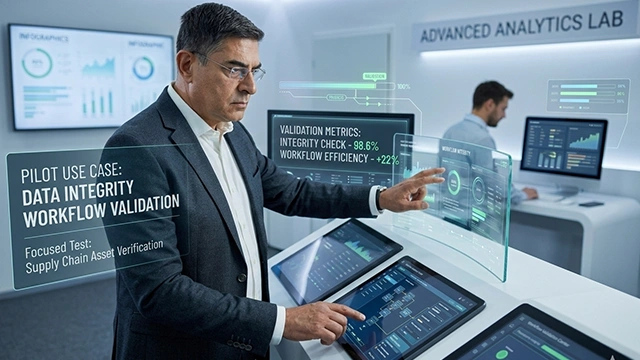
A focused pilot deployment with your real data and your real workflows. You run Cross-Merkleization, ZK proofs, ML-DSA-87 signatures, and BFT finality in your environment before committing to full rollout. The goal: prove the value to your security team, your compliance team, and your leadership before the PO is signed.

Go Live

Full production deployment with SDK integration, infrastructure configuration, and SLA-backed support. Main Network or dedicated sovereign chain. Your architecture, your compliance posture, your rules — fully cross-merkelized with the broader ULedger network from day one.
Hierarchical Blockchain Wallet Management System for an Organization

Your Encrypted Records Are Only as Safe as the Algorithm Protecting Them.​

Classical encryption has an expiry date. The records your organization depends on — financial instruments, patient data, legal documents, IP — need signatures that survive quantum computing. ULedger is the only enterprise blockchain protocol where that protection is already built in, already certified, and already running.
SOC 2 Type 2 Certified · HIPAA Compliant · NIST FIPS 204 · No Token Required
Hierarchical Blockchain Wallet Management System for an Organization

Protocol Architecture Designed for Long-Term Security

ULedger's security architecture starts from a premise most enterprise blockchain platforms never adopted: that cryptographic algorithms have expiry dates, that trust assumptions should be minimized at every layer, and that enterprise data infrastructure needs to survive both today's threat landscape and the one coming in the next decade.

Every design decision in the protocol — from the per-chain algorithm selection to the ZK proof stack to the BFT consensus model — reflects that premise.

Post-Quantum Native

ML-DSA-87 (NIST FIPS 204) as a first-class signing algorithm — not an add-on, not a future release

Algorithm Agility

Signature and hash algorithms are per-chain configuration — secp256k1, Ed25519, BLS12-377, or ML-DSA-87

Immediate Finality

Council BFT — every committed block is final, irreversible, and immune to long-range reorg attacks

Dual ZK Proof Coverage

Groth16 per-transaction + PLONK per-block — full chain verifiable externally with zero data exposure

Cross-Merkleization

ZK-proven cross-chain anchoring — data integrity verifiable across systems and organizations with no bridge contracts

No Token Dependency

Flat-rate licensing — no gas fees, no crypto exposure, no token required to write a record

Privacy-First Data Integrity

ULedger never stores raw data on-chain. The protocol anchors cryptographic commitments — hashes, Merkle roots, and ZK proofs — not the underlying records themselves. Your data stays in your systems, under your control, subject to your data residency requirements.
What goes on-chain is the proof that the data exists, hasn't changed, and was created at a specific point in time. That proof is independently verifiable by any authorized party forever — without ever exposing the data behind it.

On-Chain

Cryptographic hashes · Merkle roots · ZK validity proofs · Cryptographic timestamps · Cross-chain anchors

Off-Chain

Raw records · Sensitive payloads · PII · PHI · Financial data · Proprietary content

Access Control

Hierarchical wallets with CRUD-level permissions · Cascade disable · Admin and custom permission groups · Enforced at the consensus layer

Data Residency

Your data never leaves your environment · Full alignment with GDPR, HIPAA, and data sovereignty requirements
Hierarchical Blockchain Wallet Management System for an Organization

Where Data Security Failures Are Existential

Every use case below represents a real failure mode — a regulatory fine, a breach disclosure, a lost lawsuit, or a compromised system. ULedger's protocol eliminates the underlying vulnerability at the infrastructure layer.
Artistic Representation of Blockchain Technology or Data Encryption
Email & Communications Integrity
Learn More

Email & Communications Integrity

Every email, communication, and document exchange anchored to an immutable blockchain record with a cryptographic timestamp and ML-DSA-87 signature. Authenticity is independently verifiable. Phishing attacks that alter message content are detectable. Legal discovery becomes provable, not contested.

Conceptual Representation of Artificial Intelligence (Ai) and Digital Innovation
Secure Logging Layer
Learn More

Secure Logging Layer

As AI systems make consequential decisions — in credit scoring, clinical diagnosis, fraud detection, autonomous trading — the provenance of every input, every model version, and every output becomes a liability question. ULedger anchors the full AI audit trail: training datasets, prompt histories, inference runs, and model outputs — tamper-proof, timestamped, independently verifiable. The infrastructure layer for responsible AI.

A Data Scientist or Business Leader
AI Governance & Provenance
Learn More

AI Governance & Provenance

Audit trails of training data, prompts, and model outputs for ensuring transparent AI decision-making.

A Data Scientist or Business Leader
Supply Chain Integrity
Learn More

Supply Chain Integrity

Product origin, custody transfers, quality certifications, and delivery events anchored across every supply chain participant via Cross-Merkleization. Each partner verifies the record without accessing any other party's internal data. Counterfeiting becomes provably detectable. Disputes over chain of custody become mathematically resolvable.

A Data Scientist or Business Leader
Regulatory Compliance Recordkeeping
Learn More

Regulatory Compliance Recordkeeping

FINRA CAT, SEC Rule 17a-4, HIPAA audit requirements, SOX controls, and GDPR documentation obligations all share one requirement: records that cannot have been altered after the fact. ULedger satisfies that requirement at the protocol level — not through policy, not through access controls, but through cryptographic immutability that a regulator can independently verify without contacting ULedger.

A Data Scientist or Business Leader
Cross-Organizational Verification
Learn More

Cross-Organizational Verification

When records cross organizational boundaries — between a bank and its auditor, a hospital and its insurer, a manufacturer and its regulator — the receiving party has no way to verify the record hasn't been altered in transit. Cross-Merkleization solves this permanently. Every record shared across organizations is cryptographically anchored on both sides — independently verifiable, immutably timestamped, provably unchanged.

Benefits of Blockchain Data Integrity

Blockchain brings practical advantages that go beyond technical improvements. It directly impacts business performance and risk management.

Reduced Fraud

Tamper-proof records make it harder to manipulate data. This lowers the risk of internal and external fraud.

Compliance Readiness

Many industries require strict record-keeping. Blockchain provides clear audit trails that meet regulatory requirements.

Faster Audits

Auditors can access verified data without manual checks. This reduces audit time and effort.

Improved Trust Between Stakeholders

When all parties access the same verified data, trust increases. This helps in partnerships, supply chains, and financial transactions.

Operational Efficiency

Automation and real-time validation reduce manual work. Teams spend less time verifying data and more time using it.
These benefits make blockchain a strong choice for organizations that handle sensitive or high-value data.

What Is a Quantum Safe Blockchain

Quantum computing introduces a new type of risk. It has the potential to break traditional encryption methods used today.
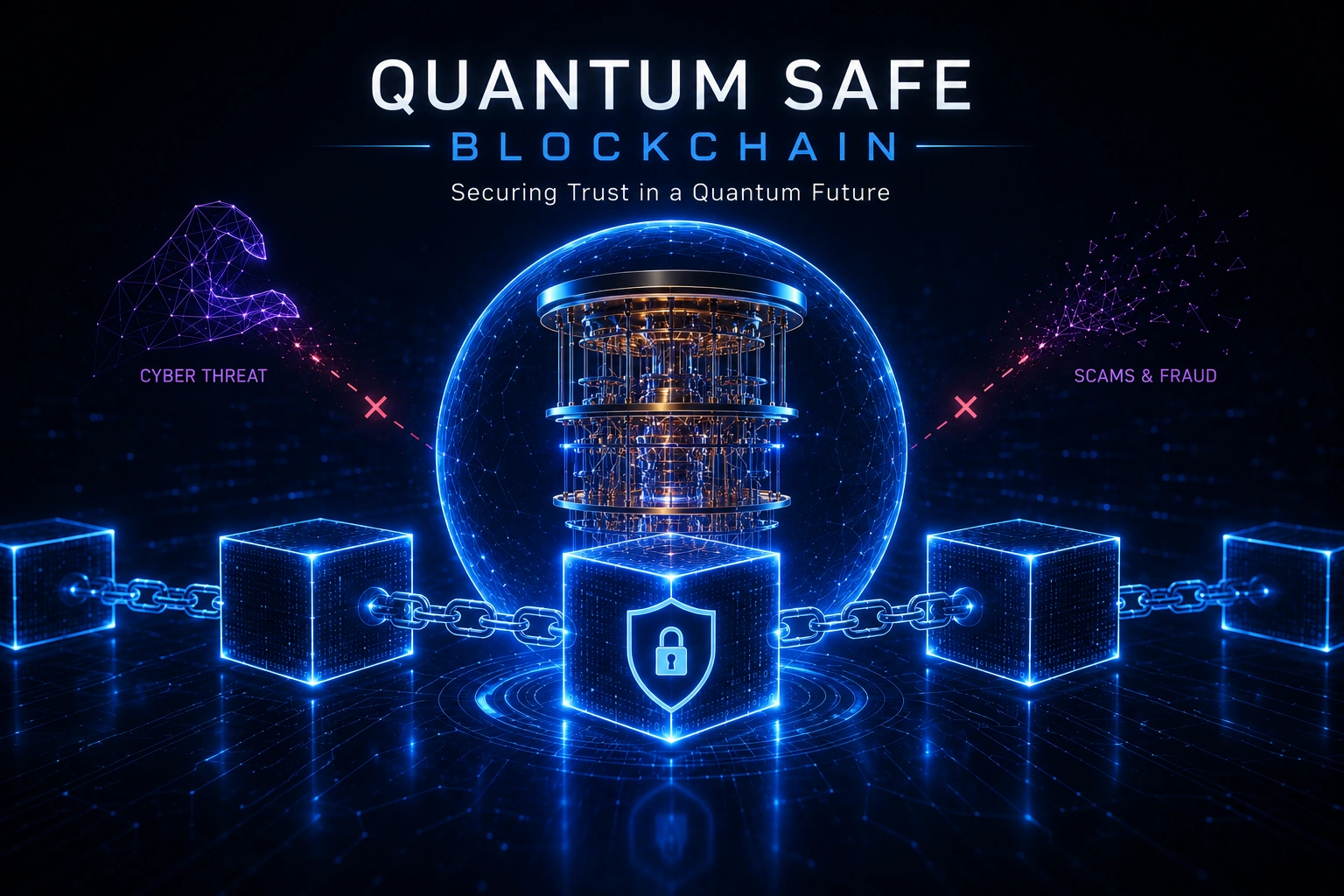
A Quantum Safe blockchain prepares for this future. It uses cryptographic techniques that remain secure even against quantum attacks.
Key Characteristics
  • Resistant to quantum-based decryption methods
  • Protects long-term data integrity
  • Supports future-proof security strategies
Most current systems rely on encryption that works well today. However, data stored now could become vulnerable later when quantum technology advances.
Quantum Safe blockchain solves this by adopting stronger algorithms. It ensures that your data stays protected not only today but also in the years ahead.
This approach becomes important for industries that need long-term data security, such as finance, healthcare, and government systems.
Hierarchical Blockchain Wallet Management System for an Organization

Blockchain vs Traditional Data Integrity Systems

Different systems approach data integrity in different ways. The comparison below highlights the key differences.
Feature Blockchain Traditional Systems
Tamper resistance High Low
Auditability Built-in Manual
Trust model Decentralized Centralized

Tamper Resistance

Blockchain prevents unauthorized changes through its structure. Traditional systems rely on access controls, which can fail if compromised.

Auditability

Blockchain records every action automatically. Traditional systems require manual logs and verification.

Trust Model

Blockchain distributes trust across multiple nodes. Traditional systems depend on a central authority. This difference changes how organizations manage risk and verify data.
Data integrity remains a critical requirement in modern systems. As data volumes grow, so do the risks of tampering, fraud, and inconsistency.
Blockchain offers a strong solution by building integrity directly into the system. It creates immutable records, enables real-time verification, and improves transparency across operations. When combined with Quantum Safe security, it also prepares organizations for future threats. This ensures that data remains protected even as technology evolves.
Auditors can access verified data without manual checks. This reduces audit time and effort.
Hierarchical Blockchain Wallet Management System for an Organization

What No Other Enterprise Blockchain Platform Offers

1. The Only Platform With ML-DSA-87 Native Every other enterprise blockchain platform is either planning post-quantum support or offering it as an optional add-on. ULedger ships ML-DSA-87 as a core protocol primitive — selectable per chain deployment, running in production today, NIST FIPS 204 compliant.
2. ZK Proofs on Every Transaction AND Every Block Most platforms that offer ZK proofs apply them selectively. ULedger runs Groth16 on every transaction and PLONK on every block header — meaning the entire chain is externally verifiable, at any time, by any authorized party, without chain state access.
3. Immediate Finality — Not Probabilistic Every committed block in ULedger is final the moment it commits. No confirmation windows. No forks. No reorgs. No probabilistic settlement risk. This matters for financial instruments, legal records, and regulatory filings where the chain of events must be unambiguous.
4. Cross-Chain Integrity Without Bridges Cross-Merkleization anchors state across independent chains using ZK-SNARK proofs — no bridge contracts, no relay operators, no trusted intermediaries. Data integrity is verifiable across organizations and jurisdictions without data sharing and without counterparty trust.
5. SOC 2 Type 2 Certified. HIPAA Compliant. No Token Required. The compliance certifications that matter for regulated enterprise buyers. The pricing model that enterprise finance teams can plan around. The only blockchain infrastructure that checks all three boxes.

Start Your Integration
OUR APPROACH
OUR APPROACH

Built for Environments Where Integrity Failures Have Consequences

Every industry below operates under regulations, legal exposure, or operational realities that make data integrity non-negotiable. ULedger provides the cryptographic foundation — the rest is deployment.
Time Is Money Icon

Financial Services

Immediate BFT finality for real-time settlement. ML-DSA-87 signatures protecting transaction records from quantum exposure. FINRA CAT and SEC Rule 17a-4 compliant audit trails that regulators can independently verify. Zero gas fees and flat licensing for predictable infrastructure costs. SOC 2 Type 2 certified.
Certification Renewal, Continuous Compliance, and Re-Certification Processes

Healthcare & Life Sciences

HIPAA-compliant patient record audit trails with cryptographic timestamps. Hierarchical wallets mirror hospital org structures — access controls at the provider, department, and system level. ZK proofs let external auditors verify record integrity without ever accessing PHI. Immutable audit logs that cannot be altered by insiders. HIPAA compliant out of the box.
Representation of Digital Disruption

Legal & Insurance

Every document hash anchored immutably with a cryptographic timestamp the moment it is created. Contract histories that cannot be disputed because the math is the evidence. E-discovery responses backed by ZK-verified audit trails. Insurance claims supported by tamper-proof event records. Post-quantum signatures protecting instruments with 10, 20, or 30-year lifespans.
Automated Development Processes

Government & Public Sector

Land registries, procurement records, regulatory filings, and identity management anchored to an immutable ledger with cryptographic timestamps. PLONK block proofs let any authorized auditor verify complete record histories without chain-state access. Permissioned networks keep classified or sensitive data private while maintaining full verifiability of the integrity proof. Cross-jurisdictional record anchoring via Cross-Merkleization.
Server Error Icon

Supply Chain & Manufacturing 

End-to-end provenance anchored across every partner, warehouse, and carrier with Cross-Merkleization. Product origin certificates, custody transfers, quality audits, and delivery confirmations — each verifiable across organizations with no data sharing required. Counterfeiting is detectable at the record level. Regulatory traceability requirements met without rebuilding partner infrastructure.
Document/checklist Icon

AI & SaaS Platforms

The emerging regulatory and liability requirement for AI systems: prove that your model used this training data, ran this inference, and produced this output — and that none of it was altered. ULedger anchors the complete AI provenance chain with cryptographic immutability. As AI governance frameworks mature globally (EU AI Act, SEC guidance, NIST AI RMF), ULedger provides the infrastructure layer that makes compliance provable rather than asserted.
Saazee Webflow Template-Story Image
Benefits
Secure business process automation at scale ​​
Faster time-to-market, developer-first
Reliable and fast blockchain performance​
Future-proof data integrity & security​
Resolve conflicts efficiently in distributed systems​​
Cross-chain verification without data exposure​
Saazee Webflow Template-Story Image
Features
Saazee Webflow Template-Story Image
Background White Green
FAQ's

Frequently Asked Questions

What is a harvest-now / decrypt-later attack and why does it matter today?
A harvest-now / decrypt-later attack is when an adversary collects your encrypted data today — without being able to decrypt it yet — and stores it until quantum computing matures enough to break the encryption. At that point, everything they collected retroactively becomes readable. Nation-state threat actors are already executing this strategy against high-value targets. For enterprises with records that carry long-term sensitivity — financial instruments, healthcare data, legal documents, intellectual property — the exposure window is open right now. ML-DSA-87 closes it because the underlying mathematics have no known quantum attack.
 How Does Blockchain Ensure Data Integrity in Enterprise Systems?
Blockchain creates immutable, time-stamped records that cannot be altered without detection. This makes it easier to prove what happened and when.
What specifically is ML-DSA-87 and what makes it different from what ULedger was using before?
ML-DSA-87 is CRYSTALS-Dilithium at Security Level 5, standardized by NIST as FIPS 204 in August 2024 — the first and only post-quantum digital signature algorithm to receive final NIST standardization. It is based on the hardness of Module Learning with Errors, a mathematical problem with no known efficient classical or quantum algorithm. The difference from classical schemes like ECDSA or Ed25519: those are vulnerable to Shor's algorithm on a sufficiently powerful quantum computer. ML-DSA-87 is not. ULedger ships it as a native protocol primitive — selectable per chain deployment, running in production today.
What Is a Quantum Safe Blockchain?
A quantum-safe blockchain combines distributed ledger architecture with quantum-resistant cryptography. It keeps records tamper-evident while preparing for future threats.
How does ULedger's ZK proof system work and what does it actually prove?
ULedger runs two ZK proof systems simultaneously. Groth16 generates a per-transaction validity certificate (~200 bytes) proving — without revealing private inputs — that the sender holds a valid key, the signature is correct, the payload is untampered, and the timestamp is within the valid window. PLONK generates a per-block header proof (~500 bytes) proving the block's Merkle tree is correctly computed and the block index is valid. Together they enable an external auditor to verify an entire block's correctness — every transaction included — by checking two sub-700-byte proofs. No chain state download. No data access. No counterparty trust.
How Does Blockchain Improve Data Integrity in Regulated Industries?
It creates permanent audit trails that support compliance and investigations. Regulators can verify records without relying on editable internal logs.
Why Do Enterprises Need Quantum-Resistant Cryptography Today?
Data stolen today can be decrypted later when quantum technology matures. Quantum-resistant cryptography prevents that long-term exposure.
What is algorithm agility and why does it matter for our existing systems?
Algorithm agility means ULedger's signature and hash algorithms are per-chain configuration — not hardcoded. Each blockchain deployment selects from the supported set: secp256k1, Ed25519, BLS12-377, or ML-DSA-87. For organizations with existing deployments on classical chains, this means you can deploy new ML-DSA-87 chains and anchor them to your legacy chains via Cross-Merkleization — migrating incrementally to post-quantum cryptography without data loss, downtime, or a hard cutover. Your old records stay valid on their original chain. Your new records are quantum-safe from day one.
What Are the Risks of Quantum Computing to Current Encryption Methods?
Quantum computers could break widely used public-key encryption algorithms. That would expose stored data, digital signatures, and authentication systems.
Is ULedger SOC 2 Type 2 certified and HIPAA compliant?
Yes to both. ULedger is SOC 2 Type 2 certified and HIPAA compliant. Both compliance badges are displayed in the site footer. For enterprise buyers in financial services, healthcare, or government — these certifications are typically required before a procurement conversation begins. We're ready for your security review.
Does ULedger store our actual data on-chain?
No. ULedger anchors cryptographic commitments — hashes, Merkle roots, and ZK proofs — not the underlying records themselves. Your data stays in your systems, under your control, subject to your data residency requirements. What goes on-chain is the proof that your data exists, is unchanged, and was created at a specific timestamp. That proof is independently verifiable forever without ever exposing the data behind it. This design is GDPR-compatible and aligns with HIPAA's data residency requirements.
Do I need to hold cryptocurrency or pay gas fees to use ULedger?
No. ULedger operates on a flat licensing model. There are no gas fees, no required token holdings, and no exposure to crypto market volatility. Pricing is predictable and designed for enterprise procurement cycles.